Wednesday, November 4, 2015

Federal Hall


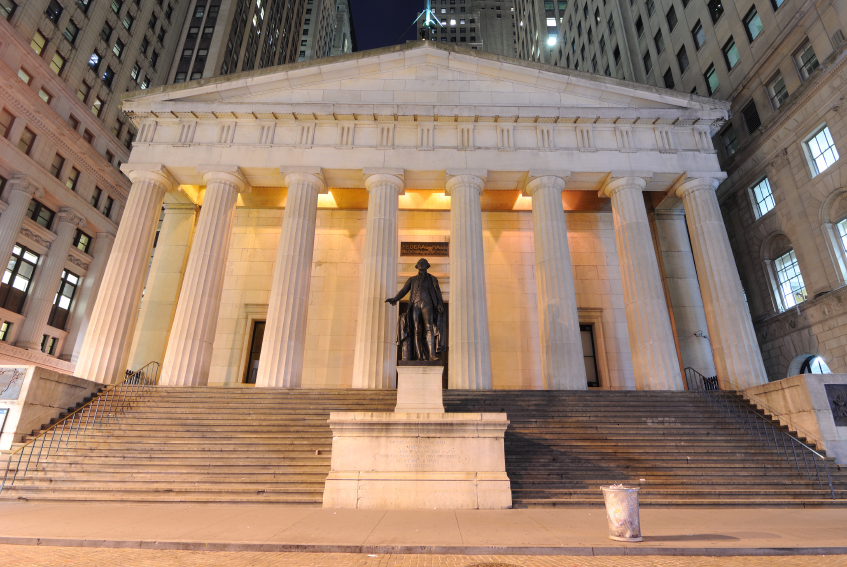
On the corner of Nassau and Wall Street in lower Manhattan, there is a building named Federal Hall, which was built in 1702 before the Revolutionary War.

Federal Hall may be New York City’s most important monument. It has served many important functions, including, NYC’s City Hall, the home of the Stamp Act Congress, the home of the Federal Government, a customs house, and a treasury.

It first served as a colonial City Hall for the British and played that part for many years.

In 1735, the John Peter Zenger Trials were held there, and John Peter Zenger was jailed, tried, and acquitted of libel for exposing government corruption in his paper. The trial was one of the first steps taken toward achieving freedom of press, and in a couple of decades, freedom of press would be written there in a formal document known as the Bill of Rights.

In 1765, the Stamp Act Congress convened here to write a letter to the king to ask for representation in Parliament (“no taxation without representation” created there). As you may know, the Stamp Act Congress was made up of delegates from 9 of the 13 colonies in America.

After the revolutionary war, in 1785, it was also a meeting place for the continental congress.

When NYC became the first capital of the US, a french born american named Pierre L’enfant enlarged and remodelled the Federal Hall.

In 1789, George Washington was inaugurated in Federal Hall when he became the first president of the US. Sitting at the top of the steps there, there is a bronze statue of George Washington commemorating that. This meant that the senate, house of representatives, and president would be located here.  

In 1789, things like the Tariff of 1789 and the Judiciary Act were put into place there.
In 1790, congress ended its first session by passing twelve amendments; ten of which became the Bill of Rights. In 1790, when the second session of congress started, the naturalization act, the patent act, the copyright act, the indian intercourse act, and the compromise of 1790 were ratified in Federal Hall. The Judiciary Act gave the judicial power of the country to one supreme court, district courts, circuit courts, and district attorneys.Also in 1790 the second session of congress ended and the US capital was moved to Philadelphia, leaving Federal Hall to house the NYC government.

In 1812, Federal Hall was demolished. This happened because of the opening of the new NYC City Hall. Parts of the demolished city hall are on display inside the museum. The current structure that still stands was built as a customs house in 1842. In 1862, the customs house moved and it became one of six sub treasuries and was where the independent treasury system was developed. Millions of dollars of gold and silver were kept in the basement vaults. The new building is a classic Greco-Roman style, and was one of the first examples of the style of Federal buildings in America.  

As of March 26, 1939, Federal Hall building was dubbed Federal Hall Memorial National Historic Site. In 1955, congress renamed it Federal Hall National Memorial in honor of the earlier edifice.

Tuesday, November 3, 2015

African Burial Grounds (#10)

Elise

            Today, the African Burial grounds are a National Monument that is honored and recognized for its significance to the topic of slavery in New York, specifically the city, during the seventeenth and eighteenth centuries. It was created over three hundred years ago at the north graveyard of the Trinity Church, and was originally a public burial ground, as opposed to specifically African-American. However, in 1697, the church declared that any African American who attempted to bury a loved one in the graveyard would be physically punished. Thus, the African burial grounds were born when African-Americans found a gravesite on the outskirts of New York City to bury their loved ones.
            Through urban development and landfill, the African burial grounds became lost after the 17th and 18th centuries.
            Three hundred years later, in May of 1991, the site was rediscovered accidentally. There were plans to construct a federal building over the spot where the bodies were buried, and they were discovered during field testing for a cultural resource survey (a prerequisite for building a thirty-four story building). The rediscovery of this historical site emphasized the forgotten history of African slaves in New York City, who were fundamental to its development.
            This rediscovery was a breakthrough in the fields of history, anthropology and archaeology. Scientists dug up the remains of the long deceased African Americans and used them to do research on their lifestyles. From these remains, they were able to find out about the health, diet, gender, age, physical condition and cause of death of each individual corpse. This research, which took about two decades, helped piece together a more complete history of New York City during the sixteen and seventeen hundreds, and manifested a race that, during the 17th and 18th century, was often overlooked and abused.
            From their investigations, scientists discovered that life for the Africans was precarious. Several of the burials were of children younger than the age of two. Calamities such as poverty, malnutrition and back-breaking labor were also found to be common among the Africans of New York.
            The digging up of corpses form a historically significant site may seem inhumane. In fact, once word spread of the discovery, a multitude people of the African-American community, including some politicians and celebrities, voiced concerns that the burial grounds would not get the respect and appreciation that it deserved if it were to simply be re-hidden by a building after such a significant re-discovery. But the cemetery was still honored in a number of ways. It was deemed a National Monument, and a ceremony was held for the reburying of the corpses. A six-day ceremony was first held at Howard University where the corpses were placed in coffins and transported through the cities of Philadelphia, Newark, Wilmington and Baltimore. The coffins then made their way to a port Lower Manhattan on a boat. It is said that his port represented where the original slave trading ship used to dock centuries ago. Before the remains were lowered into the ground, they were blessed by a Yoruba priest. Four years later (in 2007) the memorial was completed. It had been composed with polished granite, and included several design features, such as a triangular structure that represents the middle passage across the Atlantic Ocean during the slave trade. This feature is called the “Ancestral Chamber”.
            What was once a graveyard for the downtrodden African-Americans of seventeenth and eighteenth-century New York City is now a national monument honored and appreciated by millions of New Yorkers of all races.


Monday, November 2, 2015

St. Paul's Chapel


St. Paul's Chapel 
                         
St. Paul's chapel played major roles during two different time periods: 
  1. Revolutionary Era:
           *This is the only surviving church in New York from the revolutionary era
          *Saint Paul's Chapel was built with a Georgian Style consisting of boxy proportions and classic portico, which is just a fancy word meaning the building is supported by columns
           *George Washington came to this church to worship after his inauguration
                  * British Generals Cornwallis and Howe
            *There is a monument in front of the church that is dedicated to General Richard Montgomery for The Battle of Quebec 
           *Saint Paul's Chapel got its name form being under the rule of Trinity Church and played a big role during the revolutionary war when Trinity Church burned down
        *September 1776: British had just begun to invade NY when a huge fire started that burned around 1,000 building including the Trinity Church. St. Paul's, however, remained   unscathed
   

      2.  September 11th, 2001:
            *The relief ministry at Saint Chapel's was supported by the labor of three institutes
                   *Seaman's Church institute
                   *General Theological Seminary
                   *Saint Paul's, in the parish of Trinity Church
            *Served as a relief center for rescue workers 
            *Held religious services, prepared hot meals, and offered medical treatment
            *There are many displays in the Church that are dedicated to the volunteers and what they had done for the city during that time


  <-- This was a chalice made by Jessica Stammen to remember     9/11. It is kept inside St. Paul's Chapel.  It includes a base made from steel of the collapsed World Trade center. She added a bronze tree trunk to evoke the tree in the churchyard that was struck down on 9/11. Two beams form from the tree trunk to represent the twin towers and at the top, God’s hands hold the chalice. His hands symbolize the hope and grace he is pouring over the people.


Robert Fulton's grave Stop

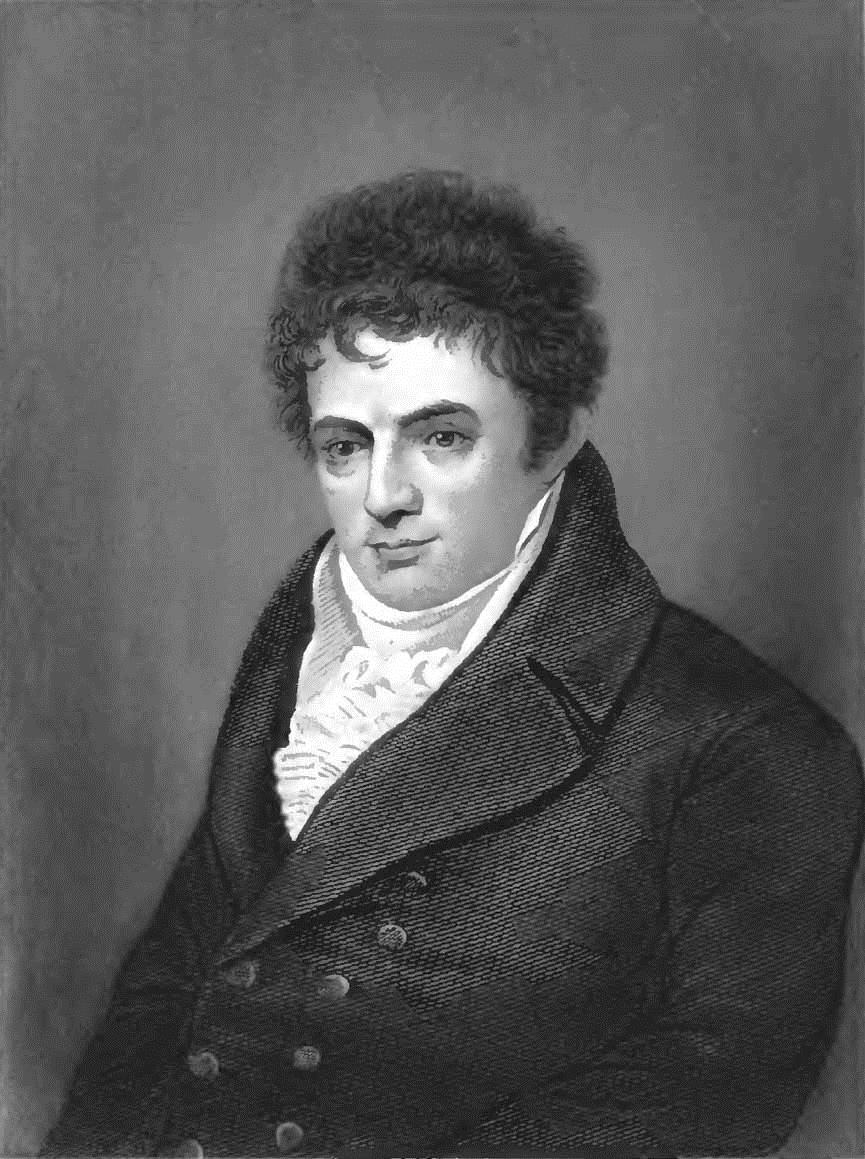
Robert Fulton

This site serves as a grave commemorating the life of Robert Fulton. 


Robert Fulton was an  inventor, engineer and artist who is perhaps best known for inventing the commercial steamboat

Here are some interesting facts about his life and accomplishments

  • He was born in Little Britain Township, Pennsylvania on November 14th 1765
  • Got the idea for a steam-powered boat, while experiencing the industrial revolution in England, he was there originally to study painting 
  • In 1806 he worked on creating water based weaponry (torpedoes, etc.) but stopped soon after not receiving grants from the government 
  • His invention replaced the Horse Ferry (which is exactly what is sounds like) a boat which was powered by horses walking on a treadmill like machine
  • Fulton married his ex-wife's niece in 1808
  • Helped construct the eerie canal 
"Robert Fulton (1765 - 1815) - Find A Grave Memorial." Robert Fulton (1765 - 1815) - Find A Grave Memorial. N.p., n.d. Web. 01 Nov. 2015.
"Robert Fulton | American Inventor." Encyclopedia Britannica Online. Encyclopedia Britannica, n.d. Web. 01 Nov. 2015.
"Pennsylvania." Robert Fulton. Virtualology.com, n.d. Web. 01 Nov. 2015.


South Street Seaport

South Street Seaport 
by Regan and Jeff

Seaport During Revolution 


Seaport Today 


Location
The port is located at the southern end of the city right after the Diamond Reef ends, and where the East River begins (right before the Brooklyn Bridge).

Background
The South Street Seaport was not always called that. Originally, it was called "The Port of New York" simply because it was New York only for a while. This port was the centralized trading point for anyone or anything that was being imported or exported to/from the colonies; this made New York the center of world trade. New York ws the center of trade due to the fact that it was the main port of the New World, so anything such as: slaves, livestock, food, slaves, and resources passed in and out of New York. Not only was the port strategically, planned out for business and trade, but its position along the New York was also important; it was centered around Schermerhorn row. Schermerhorn row was created by Peter Schermene (1810), and was a place where stores would be at street level and houses were on the second level. places like this were good economic locations, and usually hotels that provided homes for immigrants were built in these locations.

Today
Today, the pier serves as the home of Fulton fish market, which is one of the largest fish marts in the world. in addition to the market, the port also is home to Smorgasburg.


Bowling Green and Stamp Act Riots

I. Bowling Green 

1. How the Dutch used it

  • Oldest park in New York City (been around since the Dutch era)
  • English and Dutch actually used to bowl there
  • Was used as a meeting place, cattle market, and parade ground
  • Trade route for the Dutch
2. How Native Americans used it
  • the council grounds for the Natives
  • trading
3. Historic Events
  • 1626 - the major sale of Manhattan to Peter Minuit
  • 1686 - the Bowling Green became an official public park
  • 18th Century - became a residential area as well as a park
4. Major Renovations

Due to construction of the subway, the land became disrupted, but the park was rebuilt because the city expected visitors for the 1939 World's fair.
  • taking out the fountain basin
  • relocating the interior walkways
  • resulted in the park looking totally different
The capitol renovation in 1976-1977 led to the park being restored and even having some improvements ( things like new lampposts and benches)


II. Stamp Act Riots 

1. November 1, 1765 - two companies of the Son’s of liberty went to Bowling Green, where British soldiers were, once they heard the news of the stamp act, and instead of fighting the British soldiers they began to set fires in the park and throw things in it.
  • They tore down the iron railings of the park and threw it into the fire and eventually used the iron for fuel
  • They destroyed a lot of the governors property including his carriages, scaffold, effigy, horse chaise, two sleighs and other vehicles, and put them into the fire 
 The governor dared not to stop the rioters fearing for his life

2. King George the third had his statue pulled down because he was a bad leader. 
  • March 21, 1770 a statue, sculpted by Joseph Wilton, of King George III was erected.
  • However in two short years, 1774 to 1776, George III lost all of their faith and favor with the passage of the Coercive Acts, the Quebec Act, the New England Restraining Act, and the Prohibitory Act etc. 
  • On July 9th, 1776, seven days after its passage, Washington had the Declaration of Independence read to his troops and the citizens of New York City. After Jefferson cited 27 grievances against the king, he summarized his position in one sentence, “A Prince whose character is thus marked by every act which may define a Tyrant, is unfit to be the ruler of a free people.”
  • The climactic act occurred when the large crowd marched down Broadway to Bowling Green and pulled down the larger than life statue of George III.
  • Within the populace two groups were recognized for having participated in the destruction: Isaac Sears’ Sons of Liberty and Captain Oliver Brown’s soldiers (and some sailors)
  • The mob of people pulled down the statue, and later the lead was melted down to make musket balls, or bullets for use in the war for independence. Careful records were kept, and it is known that 42, 088 bullets were made.

African Burial Ground

Elliot:


Slavery in NYC

  • 1626 - First slaves brought by DWIC to New Netherland
    • Eventually slaves were given partial freedoms and farm land by Dutch (now under NYU)
  • 1664 - British takeover of New Netherland -- renamed New York
    • Rescinded slaves' freedoms granted by Dutch
    • Banned burial of blacks within the city
      • Whites buried more near Trinity Church area (where the city was)
      • ABG is outside of city limits, outskirts
  • 1703 - slave labor markets emerged
    • >50% of NY homes had about 2 African slaves
    • Harsh conditions
      • Beatings
      • Other restrictive conditions
  • 1776 - American Revolution
    • Slaves offered freedom in exchange for military service
      • British offered
        • Lost war, so poor choice for slaves, not granted freedom
        • Fought oppressors
      • Colonists offered
        • Some gained freedom, others did not
  • 1780 - Blacks to NYC
    • African Americans in NYC had more freedoms than those in the south
    • ~30% of blacks were free in NYC
  • 1799 - NYC passes emancipation law
    • Slave children freedom 
      • Males: 28 yrs old
      • Females: 25 yrs old
  • 1827 - slaves in NYC were now free, but it was difficult for them to find jobs/education/etc
          • *death of Beethoven on March 26th
  • 1863 - draft lottery during Civil War, Robert E. Lee (after whom Fort Lee is named)
    • New Yorkers opposed draft
      • Irish firemen
        • Set fire to building
        • Riot aimed at African-Americans
  • 1900's - African-Americans to Harlem
    • Little social mobility
    • Harlem was thriving with musical talent, show business, culture
    • Increase in black population was due to southern blacks moving to NYC


The history of African-Americans in New York City consists of 400 years of flip-flopping between servitude and freedom. Today, we are going to trace the fictionalized lineage of Simon Congo, an African taken from his home in the Congo, Africa by the Dutch West India Company and brought against his will to New Netherland around 1626. Simon worked hard in this new land and was eventually granted partial freedoms by the Dutch and was given land for farming in the area we now call Washington Square Park, the heart of NYU. Simon was raising his family on this land in 1664 when the British took over New Amsterdam, changed the name to New York, and rescinded many of Simon’s newly found freedoms. In addition, the British banned black burial within the city limits, paving the way for the start of the burial ground we’re standing on today.
By 1703, Simon’s children and grandchildren were part of the New York slave labor market and worked in wealthy white families’ homes in New York City. More than 50% of New York homes had up to 2 African slaves. Conditions were very bad for these slaves, which included brutal beatings and other restrictive conditions.
By the time of the Revolutionary War in 1776, Simon’s great-grandchildren were offered freedom in exchange for military service. Initially, the British offered American slaves freedom in exchange for serving in their army to fight their oppressors. However, Washington also offered African-Americans a chance to fight in the colonists’ army in exchange for freedom. When the war came to an end and the British were kicked out, life was not good for blacks serving in the British army. Luckily, Simon’s descendants chose to fight for the colonists and gained their freedom.
Blacks tried to flock to New York from the South by 1780 hoping to gain the freedoms African-Americans enjoyed in New York City. By that time, 30% of the African-American population was free in New York City. In 1799, New York passed its first emancipation law which gave freedom to slave children but not until males reached the age of 28 and females reached the age of 25.
By 1827, all of Simon’s descendents were free blacks in New York City. However, their lives were still hard with limited opportunities for education or for work and a high amount of racism across the diverse population of New York City.
Just 36 years later, with another generation of Simon’s descendents living in New York City working anywhere they can and living in cramped city conditions, times were still difficult. On the brink of the Civil War with General Robert E. Lee advancing to the Pennsylvania border, New York enacted a draft lottery to rebuild its troops. Many New Yorkers opposed this lottery, especially the Irish firemen. In a showdown in July, the Irish firemen set fire to a big building in New York and prompted a week long violent riot aimed at African-Americans. Many African-Americans were killed or took shelter in the police station or with other ethnic groups that were protecting them.

Following the violent riots, Simon’s descendents moved far to the Upper West Side of Manhattan, which became a haven and a center of African-American musical talent, show business, and culture. By 1900, continued racism and a huge influx of Eastern European immigrants to New York City pushed Simon’s descendents even farther North to the area we now call Harlem. African-Americans experienced little social mobility in New York and the large increase in the African-American population was primarily due to southern blacks moving to New York to escape difficult laws in the South. They were hoping for a better life in New York City. Simon’s descendents continue to flourish today, where they’ve moved outside New York City to the suburbs and beyond and have attended elite private schools like the Dwight-Englewood School and have gone to prestigious universities.

Photo courtesy: http://maap.columbia.edu/place/22


Bibliography: 

"African Burial Ground National Monument." Wikipedia. Wikimedia Foundation, 9 Oct. 2015. Web. 03 Nov. 2015. <https://en.wikipedia.org/wiki/African_Burial_Ground_National_Monument>.

Homberger, Eric. "African-Americans in New York." The Historical Atlas of New York City: A Visual Celebration of Nearly 400 Years of New York City's History. New York: H. Holt, 1994. 44-45. Print.


Moore, Christopher. "New York's Seventeenth-Century African Burial Ground in History." (n.d.): n. pag. National Park Service. Web. 28 Oct. 2015. <http://www.nps.gov/afbg/learn/historyculture/upload/Chris-Moore.pdf>.
"Slavery in New York." Slavery in New York. N.p., n.d. Web. 03 Nov. 2015. <http://www.slaveryinnewyork.org/history.htm>.


Sunday, November 1, 2015

Stop #1: Castle Garden/Battery Park


Battery Park was the host to five distinct “Castles” over the course of its existence:


  1. 1626: Fort Amsterdam
    1. 1 year after the settling of Battery Park in 1825, the Dutch started construction on Fort Amsterdam
    2. Fort Amsterdam was created on the port in order to defend the new Dutch settlement
    3. Fort Amsterdam also served as a trading center
  2. 1808: Castle Clinton
    1. built by Americans that feared an attack from the British, preceding the war of 1812
    2. armed with cannons that could fire for miles
    3. cannons were never fired at an enemy
  3. 1823 to 1854: Castle Garden entertainment center
    1. featured many mediums of entertainment
      1. opera
      2. theater
    2. a restaurant was also constructed
  4. 1855 to 1890: Immigration
    1. during this time 8 million people went through Castle Garden
    2. At this time, the statistic was that two of three immigrants passed through Castle Garden
  5. 1896: Aquarium
    1. The biggest attraction for the castle garden aquarium was the beluga whale

#9 City Hall Park/ The Commons / Liberty Pole


* picture of City Hall Park, Nathan Hale, and liberty Pole

The Commons,City Hall Park, and Liberty Pole

By: Ho Jun Lee & Ryan Galgano.

The Commons
  • The first Almshouse was built in 1735. 
  • During the 1730s and 1740s, the military began using the Commons as a parade ground and erected a palisade along its northern boundary in 1745.
  • City continued expanding northward, the Commons became less isolated.
  • The Commons continued to be used as a public gathering space, either for celebration or demonstration.
  • Continental Army First Heard Declaration Of Independence Here
    • George Washington read it in July 1776
  • Construction began on City Hall in 1803 and the Tweed Courthouse in 1860. Both structures remain across from in City Hall Park today.

City Hall Park

  • From 1653 to 1699 this area was known as the Commons and served as a communal pasture ground for livestock. 
    • After President Lincoln was assassinated, his funeral procession for New York residents originated at City Hall.


  • In 1765 New Yorkers protested the Stamp Act at the site, and a year later the first “Liberty Pole,”
    • Now there’s Liberty Flag Pole marker 
      • Near Broadway, under a tree, west side of City Hall Building


  • On Aug. 11, 1766, the first blood of the fight for American liberty was spilled on the New York Common
    • One of first Parks in downtown NYC


  • Some of the most notorious British prisons were in what is now City Hall Park. Park made for honor Nathan Hale
    • He born in Conventry, Connecticut, on June 6, 1755
    • After graduating from Yale University at the age of 18, Hale became a schoolteacher.
    • Attended school with fellow patriot spy Benjamin Tallmadge
    • His espionage mission
    • When war began to brew in the American colonies, he joined a Connecticut regiment and served in the siege of Boston
    • He volunteered to enter New York as a spy 
    • He was captured by the British in NYC and hanged for espionage on September 22, 1776, in New York City


  • In 1999 a $34.6 million project fully restored the park, adding a central walkway and gardens and replacing pavement with grass and trees.


    • ex) The Bridewell, named for a London jail, was the most deadly. It had no windows, only bars. The winter winds took the lives of hundreds of ill-fed patriots.


Liberty Pole
  • The first liberty pole was put up on on May 21, 1766, in City Hall park in celebration of the repeal of the Stamp Act


  • liberty poles were put up in town squares before and during the American Revolution (Newport, RI, Concord MA, Savannah, GA, New York City, NY, Caughnawaga, NY). 


  • From 1766 to 1770, British soldiers cut down four of the five Liberty Poles erected there by the Sons of Liberty. 


  • The liberty poles were put up as a symbol of American rebellion against the British king and parliament 


  • A liberty pole is a tall wooden pole, often used as a type of flagstaff, planted in the ground, surmounted by a Phrygian cap.


  • An often violent struggle over Liberty Poles put up by the Sons of Liberty in New York City ( Battle of Golden Hill; destroyed by British authorities (replaced by the Sons with new poles)


    • The “Battle of Golden Hill” was a skirmish between the Sons of Liberty and the British soldiers 


      • The event was an early cause leading to the Revolution 


  • They raged for 10 years


  • From the repeal of the Stamp Act in 1766 until the occupation of the city by British troops after the Battle of Long Island in 1776.


  • The liberty pole in New York City was crowned with a gilt vane bearing the single word, "Liberty".